Unscrew Every Screw Getting Started
From first join to first escape — the cozy incremental loop explained.
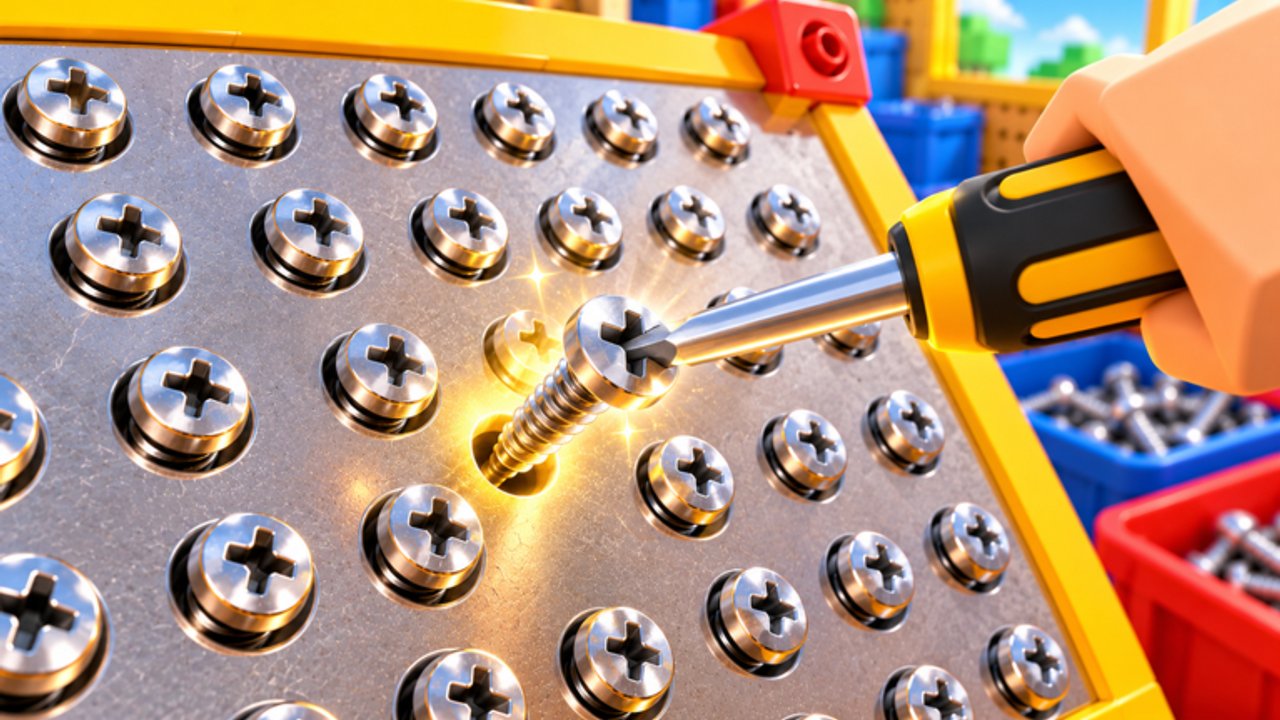
Welcome to Unscrew Every Screw, the cozy ASMR / satisfying incremental escape simulator by Omochi Guild on Roblox. Released on 2026-10-26, the experience supports up to 16 players in a shared room. Your job is simple on paper and deeply satisfying in practice: unscrew every fastener you can reach, collect what you pull, sell for Coins, buy better tools, then clear the entire room so you can escape — and chase a better personal time next run.
This guide covers your first session end to end: joining the place, reading the UI, clicking screws efficiently, selling without stranding yourself, making that first meaningful tool purchase, staying aware of the room layout, and setting a realistic first-escape goal. When you are ready for deeper systems, jump to Controls, Coin Farming, Tools & Upgrades, How to Escape, the Tools Tier List, and Speedrun Tips. Active promo rewards, when available, live on Codes.
Join the place and settle in
Open the official Roblox place for Unscrew Every Screw and wait for the server to load. Servers can hold up to sixteen players, so expect a lively room rather than a silent solo sandbox — that social noise is part of the vibe, even if you prefer headphones and focus. After spawn, take ten quiet seconds before you click anything. Orient yourself: where are the dense clusters of screws, where is the sell / shop flow, and which furniture or walls look like they hide fasteners on the backside?
You do not need a perfect route on day one. You need a calm mental map. The game rewards patience and spatial awareness more than frantic clicking. If chat or other players feel distracting, mute voice / chat as needed and treat the session like a personal ASMR loop — the progression still works the same.
Read the UI before you grind
Glance at your on-screen feedback: how many screws you are holding, how many Coins you have, and which tool you currently equip. Those three numbers drive every early decision. Screws in hand are inventory waiting to become Coins. Coins are the bridge to better tools. Tools determine how fast and how far you can strip the room.
Do not ignore sell prompts or shop access just because unscrewing feels good. The satisfying click is the hook; the Coin → tool loop is the engine. If the UI shows a cheap starter upgrade you can afford without emptying your entire stack, note it — your first purchase often matters more than your first hundred clicks.
Clicking screws: rhythm over spam
Approach a cluster, aim carefully, and unscrew with intention. Early tools are slow; that is intentional. Focus on fasteners that are fully visible and easy to reach so you build a steady rhythm instead of fighting awkward camera angles. Sweep left to right (or clockwise around furniture) so you do not leave random singles behind that become softlocks later.
Collect what you unscrew. Leaving loose screws on the floor while you chase another wall is how beginners lose track of progress and feel “stuck” with empty hands and no Coins. Build a habit: clear a small zone, collect, then decide whether to sell or keep grinding with the same tool.
Hidden and backside screws exist. Walk around objects, crouch or adjust camera height when needed, and check under shelves, behind frames, and on the reverse of free-standing props. Your first escape fails more often from missed fasteners than from slow tools. Treat every surface as suspect until you have scanned it twice.
Selling for Coins without stranding yourself
Selling converts collected screws into Coins. Sell often enough that you can afford the next useful tool, but not so often that you interrupt a productive cluster mid-flow. A good early habit is to sell when you have a tidy stack and a clear next purchase target — or when inventory pressure makes continuing inefficient.
The soft mistake is selling everything the moment you can buy something shiny, then returning to a half-cleared room with a tool that still cannot reach the remaining awkward screws. Keep a buffer: enough Coins for the upgrade you planned, plus a little left so you can keep clearing without panic. Mid-room upgrades are fine; mid-room bankruptcy is not.
If promo codes are live, redeem them early in a session so bonus Coins or helpers feed your first purchases instead of sitting unused until after escape.
Your first tool purchase
Your starter tool gets you into the loop. Your first shop buy should solve a real bottleneck: either speed (faster unscrews on easy clusters), reach (hitting screws that felt awkward or distant), or a special quality that clearly opens more of the room. Do not chase vanity. Open the shop, compare what you can afford, and ask: “Will this help me finish this room faster or more completely?”
After you buy, go straight back to a dense area and feel the difference. If the upgrade barely changes your pace, you may have spent on the wrong axis — use the next Coin batch more carefully. For longer-term priority and diminishing returns, read Tools & Upgrades and cross-check rankings on the Tools Tier List.
Room awareness and the first-escape goal
Escape means clearing every screw in the room — not “most,” not “all the obvious ones.” Before you celebrate, do a full sweep: floor level, eye level, high mounts, backsides, and any prop you previously skipped because it looked empty. Common miss spots are thin edges, shadowed corners, and screws that only appear after nearby pieces are gone.
Set a first-session goal that matches the cozy design: complete one clean escape, note your time if the game shows it, and leave knowing the loop. Competitive personal bests come later in Speedrun Tips. For now, prioritize completeness over speed. A slow first escape teaches the room; a fast incomplete run teaches frustration.
First-hour checklist
- Join, mute distractions if needed, and scan the room layout.
- Unscrew easy clusters; collect consistently.
- Sell with a purchase plan — keep a Coin buffer.
- Buy one upgrade that fixes speed, reach, or access.
- Re-scan for hidden / backside screws.
- Clear every fastener, then claim escape.
- Bookmark How to Escape for the next session’s softlock checklist.
What to read next
Once the loop clicks, deepen tool economy in Tools & Upgrades, learn softlock avoidance in How to Escape, rank purchases with the Tools Tier List, and shave seconds with Speedrun Tips. Check Codes whenever you rejoin after an update. The game is satisfying when you treat it as a calm craft — click, collect, sell, upgrade, clear, escape, improve.
Frequently Asked Questions
Quick answers for Unscrew Every Screw players.
What is the basic loop in Unscrew Every Screw?
Unscrew screws, collect them, sell for Coins, buy better tools, clear every screw in the room to escape, then try to beat your best time.
How many players can share a server?
Servers support up to 16 players. You can still play focused and cozy; mute chat if the social noise breaks your rhythm.
When should I buy my first tool upgrade?
As soon as you can afford an upgrade that clearly improves speed, reach, or access — without spending so hard that you cannot keep clearing the current room.
What counts as escaping?
Clearing every screw in the room. Missed backside or hidden fasteners will block a true escape even if the space looks empty.
Where do I redeem codes?
Use the in-game code entry when the experience provides one, and verify active rewards on the Codes hub before you grind.